A decade ago, I characterized Kratom as a significant benefit, believing I would maintain a disciplined approach to its use. I never anticipated that at over forty years of age, I would find myself residing in my father’s home, having been drawn into a vortex by products marketed as Kratom. In reality, these substances are potent opioids designed to induce rapid dependence. The subsequent mental and financial toll led to a personal breakdown, primarily attributed to the substance known as 7-hydroxymitragynine (7-OH). It is deeply concerning that such products are readily available at retail locations, accessible to anyone. Those familiar with opioid dependence understand the temporary relief from pain these substances provide, which can feel like a profound discovery. Even now, reflecting on these experiences induces a strong desire for the substance, despite the severe distress and hardship it has recently caused. While I have a twenty-year history of substance abuse, I never knowingly used heroin or fentanyl. However, my misuse of prescription medications, research chemicals, and extracts resulted in a severe addiction, with total expenditures exceeding six figures.
My progression over several decades involved moving from Kratom to extracts, research chemicals, and eventually 7-OH and mitragynine (MIT). Having struggled with addictions to Oxycodone and Morphine on numerous occasions, I eventually sought stability through Suboxone treatment, which presented its own challenges. I intend to document my experiences and the cognitive biases that led me to believe a $200-a-day habit, resulting in eviction and family conflict, was sustainable. This journey included multiple rehabilitation stays and the subsequent initiation and cessation of Suboxone therapy. Through this account, I wish to highlight the alarming accessibility of these substances. In recent years, the industry has introduced increasingly higher dosages and utilized ambiguous labeling. My objective is to provide information, establish a constructive outlet for processing these realities, and advocate for measures that prevent these substances from devastating lives.
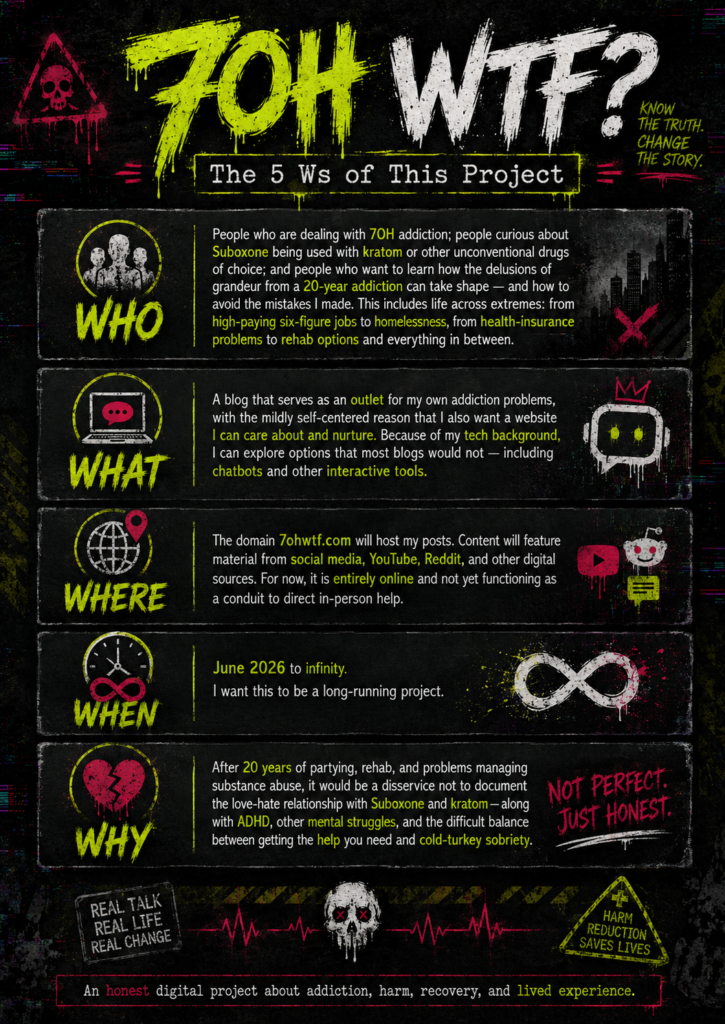
I intend to eventually facilitate independent testing of these products to confirm their actual constituents. Following a medical transition to low-dose Suboxone for maintenance, I experienced “precipitated withdrawals” during recent recovery attempts. When I previously utilized bulk Kratom powder, the physiological experience was markedly different. My recent experiences align more closely with accounts of heroin withdrawal, leading me to suspect that certain products may contain substances similar to morphine or heroin. Although my perspective may shift daily, this narrative is not intended as a traditional 12-step success story. Rather, it is an effort focused on harm reduction, reality-based insights, and empathy, emphasizing the need for regulation and improved support for those seeking to overcome dependence.